Why the Face Ages (and What Actually Helps)
The face ages in layers: skin, fat, muscle and bone all change. Understanding how is the key to choosing what actually helps, rather than chasing one fix.
 Valentina PakhrutdinovaMedically reviewed by Valentina Pakhrutdinova11 min read
It is tempting to think of facial ageing as one thing, usually lines and wrinkles. In truth the face ages in layers. The skin, the fat beneath it, the muscles, and even the bone all change over time, and each contributes something different to how an older face looks. Understanding those changes is genuinely useful, because it is the difference between chasing a single fix and choosing what actually helps. This guide explains how the face ages, honestly, and then maps each change to the treatment that addresses it.
The skin: collagen, elastin and quality
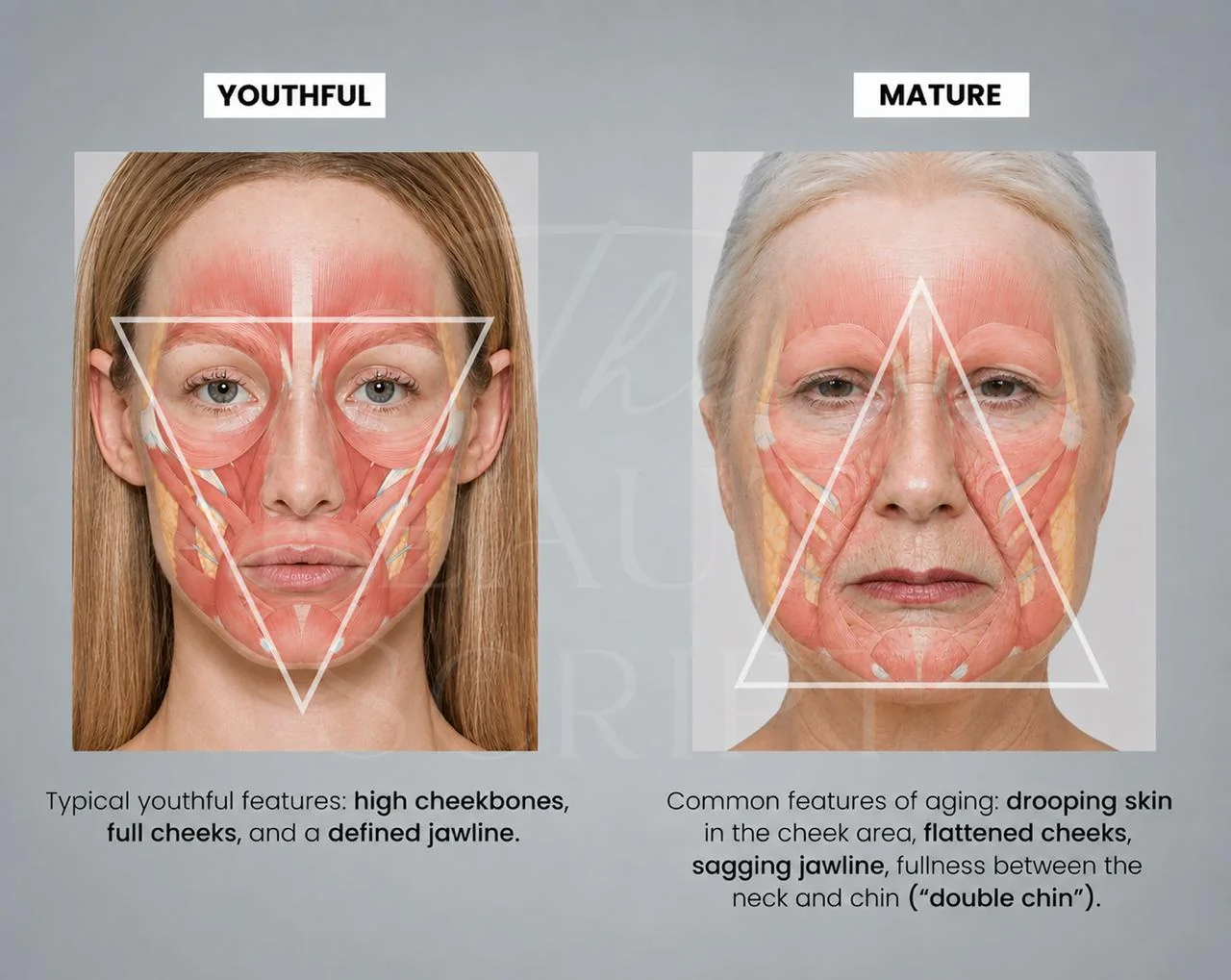
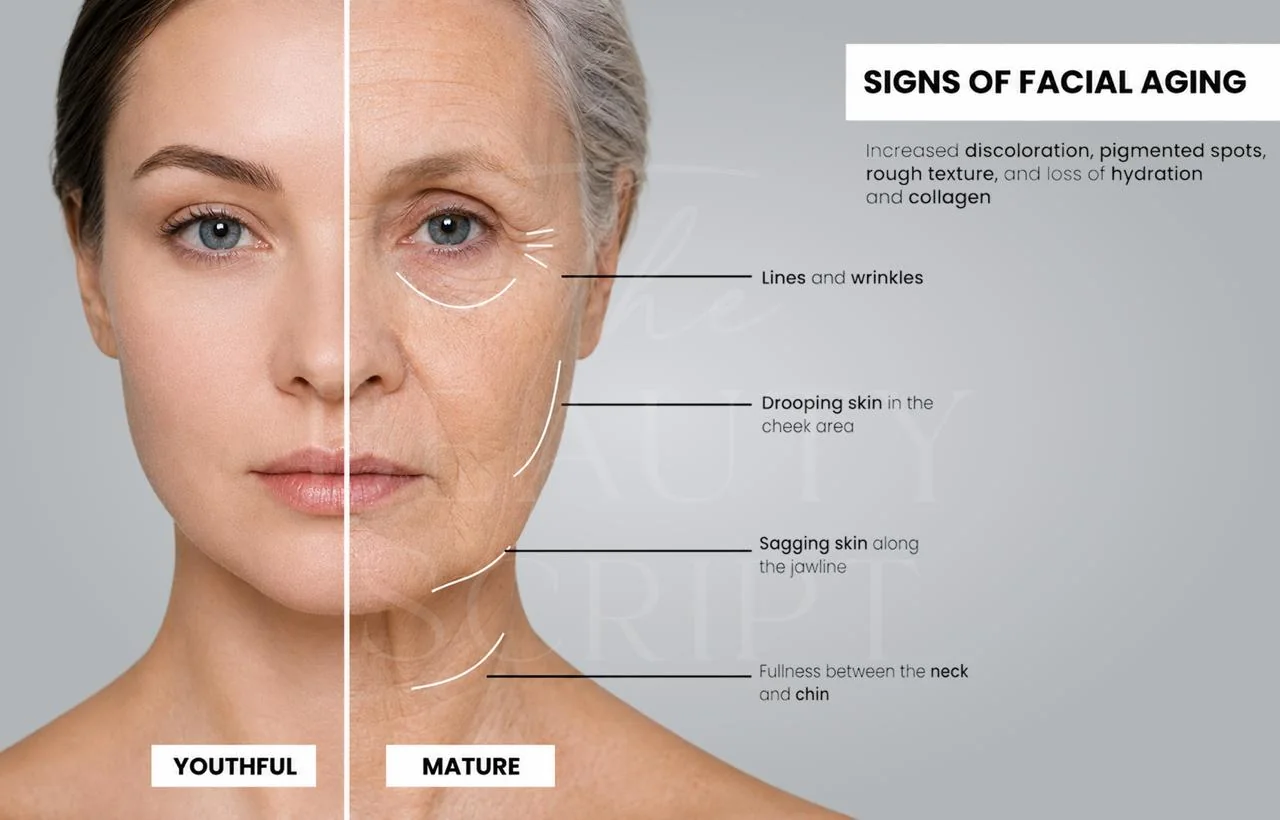
The most familiar change happens in the skin itself. From our mid-twenties, we gradually produce less collagen and elastin, the proteins that give skin its firmness and its bounce. The skin becomes a little thinner and less elastic, holds less moisture, and recovers more slowly. Fine lines appear, texture and tone become less even, and the fresh, plump quality of younger skin softens. This is a slow, steady process, and it is the layer most influenced by how we live.
Sun exposure is the single biggest external factor. A large share of the visible signs we associate with ageing, uneven tone, coarser texture, loss of firmness, comes from ultraviolet damage accumulated over years rather than from age alone. Smoking, poor sleep, and a lack of daily sun protection all add to it. This is also the good news, because it is the part we have the most influence over.
The structure: fat, muscle and bone
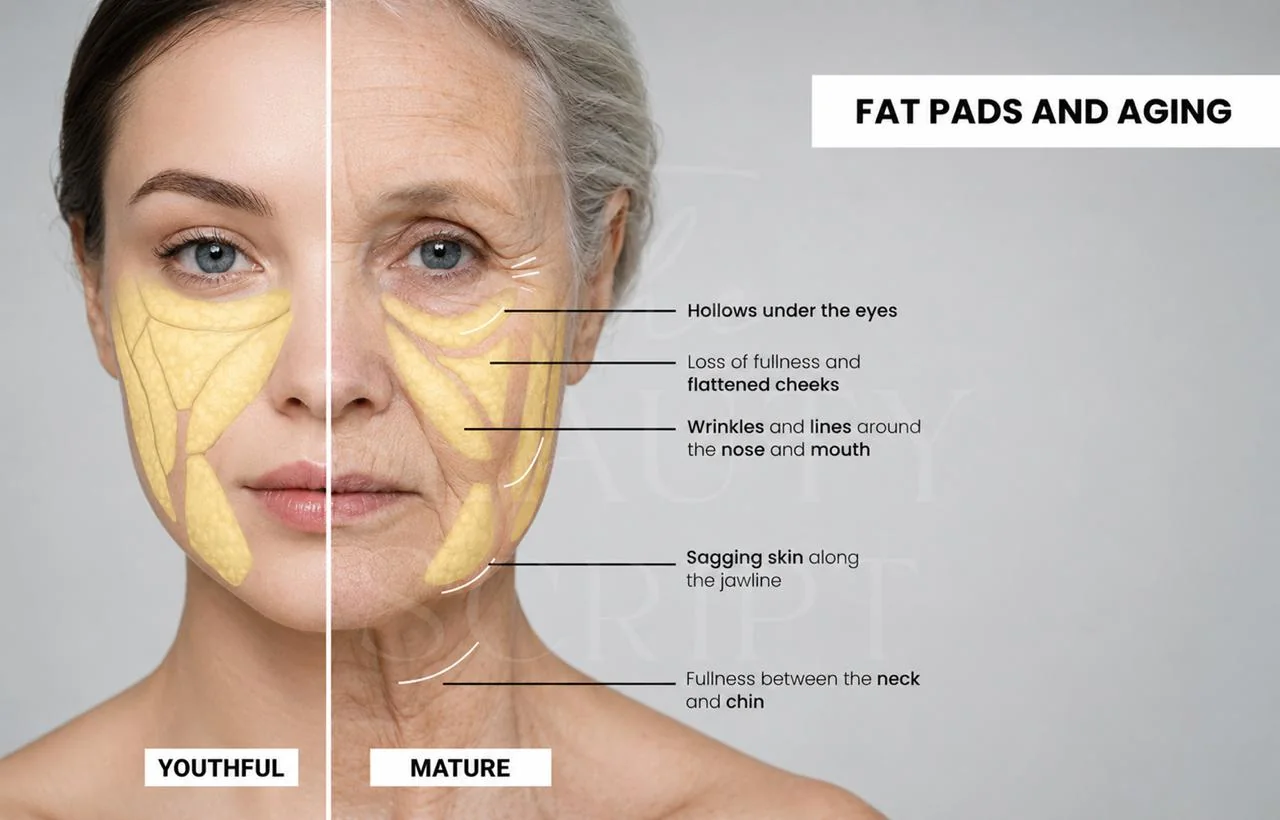
Beneath the skin, the face is supported by pads of fat, by muscle, and by the bone underneath. With age, the fat pads shrink and drift downward, so the youthful fullness of the cheeks flattens and the face can look a little hollow above and heavier below. The bone itself changes too, with subtle loss around the eye sockets and jaw that removes some of the scaffolding the skin once sat on. Together, these changes explain why an ageing face often looks less about wrinkles and more about a loss of support and proportion.
This is an important idea, because it reframes what many people think they need. A face that looks tired is often not asking for its lines to be erased, but for its lost structure and skin quality to be gently restored. Reading the changes correctly is what makes a result look natural rather than done.
Movement, and the lines it leaves
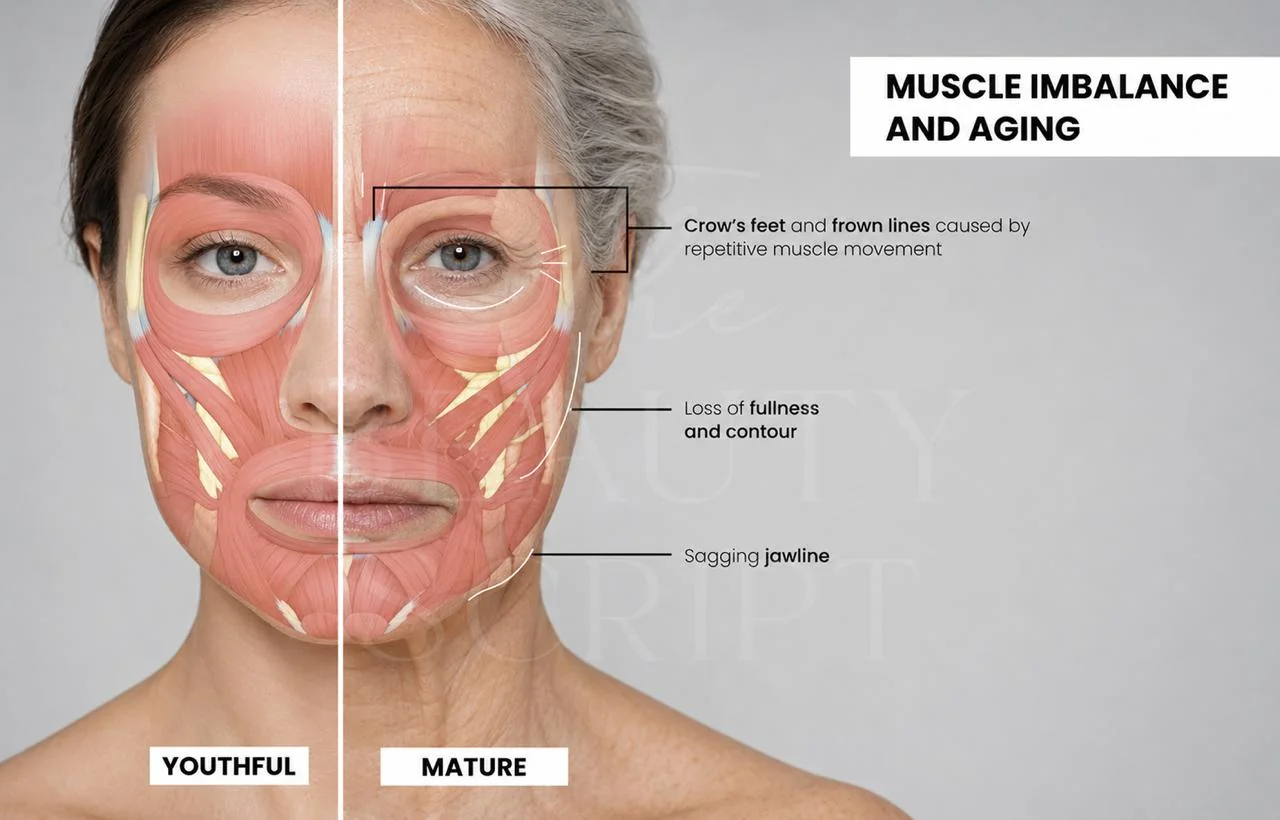
On top of all this, years of expression fold the skin in the same places, and as the skin loses its elasticity those folds begin to linger as lines even at rest. This is the most visible sign, and often the one people notice first, but as the layers above show, it is only one part of a larger picture.
Matching each change to what actually helps
Once the layers are clear, the sensible approach follows naturally. Each change is best addressed by the treatment designed for it, and no single treatment does everything. Here is how they line up.
| What changes | What helps |
|---|---|
| Skin quality, firmness and hydration | Bio-remodelling, skin boosters and medical skincare |
| Collagen and skin repair | Regenerative injectables and skin tightening |
| Lost volume and support | Carefully placed structural filler |
| Mild skin laxity | Radiofrequency skin tightening and threads |
| Expression lines | Muscle-relaxing treatment where appropriate |
| Sun damage and tone | Sun protection, skincare and peels |
For skin quality, treatments that stimulate the skin to rebuild its own collagen do the foundational work. Our guide to Profhilo and the comparison of skin boosters, Profhilo and polynucleotides explain the options for this layer. For lost structure, thoughtfully placed dermal filler can restore support where the face has lost it, and for mild laxity, radiofrequency skin tightening encourages the skin to firm over time.
What you can do yourself
It is worth being clear that a great deal is within your own hands, and it costs far less than any treatment. Daily sun protection is the most effective anti-ageing habit there is. A consistent, well-chosen skincare routine, good sleep, not smoking, and looking after your general health all slow the changes in the skin. No clinic treatment replaces these, and the best results always sit on top of good basics rather than instead of them.
An honest word on expectations
We think it is important to say plainly that ageing is normal, and the goal of good aesthetic care is not to stop it or to change your face, but to help you look like a fresher, well-rested version of yourself. Treatments can genuinely soften the signs of ageing and restore quality and support, and results build gradually. What they do not do is turn back time or make anyone look decades younger, and any clinic promising that is not being honest with you.
A considered approach at The Beauty Script
Our approach is medically-led and education-first. Rather than sell a single treatment, we assess how your face is changing across each layer, and build a personalised plan that addresses what will actually make a difference for you, at a pace that suits you. Sometimes that is skin quality, sometimes support, and sometimes the honest advice is to do less. Care is led by a registered nurse prescriber. The clinic is Save Face accredited and JCCP registered, and treatments are carried out in CQC-regulated premises.
Questions
Frequently asked questions
The face ages in layers. The skin loses collagen and elastin, so it becomes thinner and less firm; the fat pads beneath shrink and shift, and the bone changes, so the face loses support and proportion; and years of expression leave lines. Lifestyle, and sun exposure most of all, strongly influences how quickly this happens.
Collagen production naturally declines from our mid-twenties, which gradually reduces firmness and bounce. This is accelerated by external factors, above all ultraviolet exposure, along with smoking and poor general health. Because much of it is driven by sun damage, daily sun protection is the most effective way to slow it.
Daily sun protection is the single most effective anti-ageing habit, because ultraviolet damage causes a large share of the visible signs we associate with ageing. Alongside that, a consistent skincare routine, good sleep, not smoking, and general health all help. The best clinic results sit on top of these basics rather than instead of them.
There is no single best treatment, because the face ages in layers and each layer is addressed differently. Skin quality responds to bio-remodelling and skin boosters, lost support to structural filler, mild laxity to skin tightening, and expression lines to muscle-relaxing treatment. A full assessment matches your changes to what will actually help.
No, and it is honest to say so. Treatments can genuinely soften the signs of ageing and restore skin quality and support, so you look fresher and well-rested, and results build gradually. They do not stop ageing or make anyone look decades younger, and a clinic promising that is not being honest.
There is no single right age. Many treatments reward starting earlier, while there is firmness and structure to preserve, rather than waiting for advanced changes, but there is benefit at many stages. The most useful first step is an assessment that looks at how your face is actually changing and advises accordingly.
The reliable way is a full facial assessment that considers each layer: your skin quality, your underlying structure, and how your face moves. From that, a personalised plan can address the changes that will genuinely make a difference for you, in a sensible order, rather than applying a single treatment to everyone.
Important
This article is for general information only and is not medical advice. It should not replace a consultation with a qualified medical practitioner. Treatments described here are only suitable following an in-person assessment, and results vary between individuals. Always seek personalised clinical advice before deciding on any treatment.
Key takeaways
- The face ages in layers: skin, fat, muscle and bone all change over time.
- Collagen and elastin decline, so the skin loses firmness, thickness and bounce.
- Fat pads shrink and shift, and bone changes, so the face loses support and proportion.
- Lifestyle, and sun exposure most of all, strongly influences how quickly this happens.
- No single treatment addresses every layer, which is why a considered plan works best.
- The most useful step is a full assessment that matches each change to what actually helps.
Written by
Valentina Pakhrutdinova
Registered Nurse Prescriber (NMC), Aesthetic Complications Expert
Valentina is the founder and lead practitioner of The Beauty Script. A registered nurse prescriber with a background in emergency and intensive care nursing, she takes an anatomy-led, consultation-first approach and treats only what will genuinely make a difference. She is Save Face accredited, JCCP registered, and an Aesthetic Complications Expert.
View profileWant to understand your own face?
Book a consultation and full facial assessment for an honest, layer-by-layer read of how your face is changing, and a personalised plan built around it.
Book a consultation