Skin in Menopause: Why It Changes and What Helps
Skin changes noticeably around menopause, and there are real, measured reasons why. Here is what happens, and the treatments and habits that genuinely help.
 Valentina PakhrutdinovaMedically reviewed by Valentina Pakhrutdinova9 min read
If your skin seems to have changed quite suddenly around perimenopause or menopause, you are not imagining it, and it is not simply age. There is a clear, well-understood reason, and understanding it is the key to responding well. This guide explains why skin changes at menopause, and, without overclaiming, sets out the treatments and habits that genuinely help this specific and often underserved stage.
Why skin changes at menopause
The central reason is a fall in oestrogen, a hormone that plays a significant role in the skin. Oestrogen supports collagen production, skin thickness, hydration, and the skin’s ability to hold moisture and heal. As levels decline through perimenopause and menopause, so does the support the skin has relied on.
The effect can be striking in its pace. Studies suggest a substantial proportion of skin collagen can be lost in the early menopausal years, which is why change that once felt gradual can seem to accelerate. This is the same collagen story we describe in our guide to why the face ages, simply concentrated into a shorter window.
What you may notice
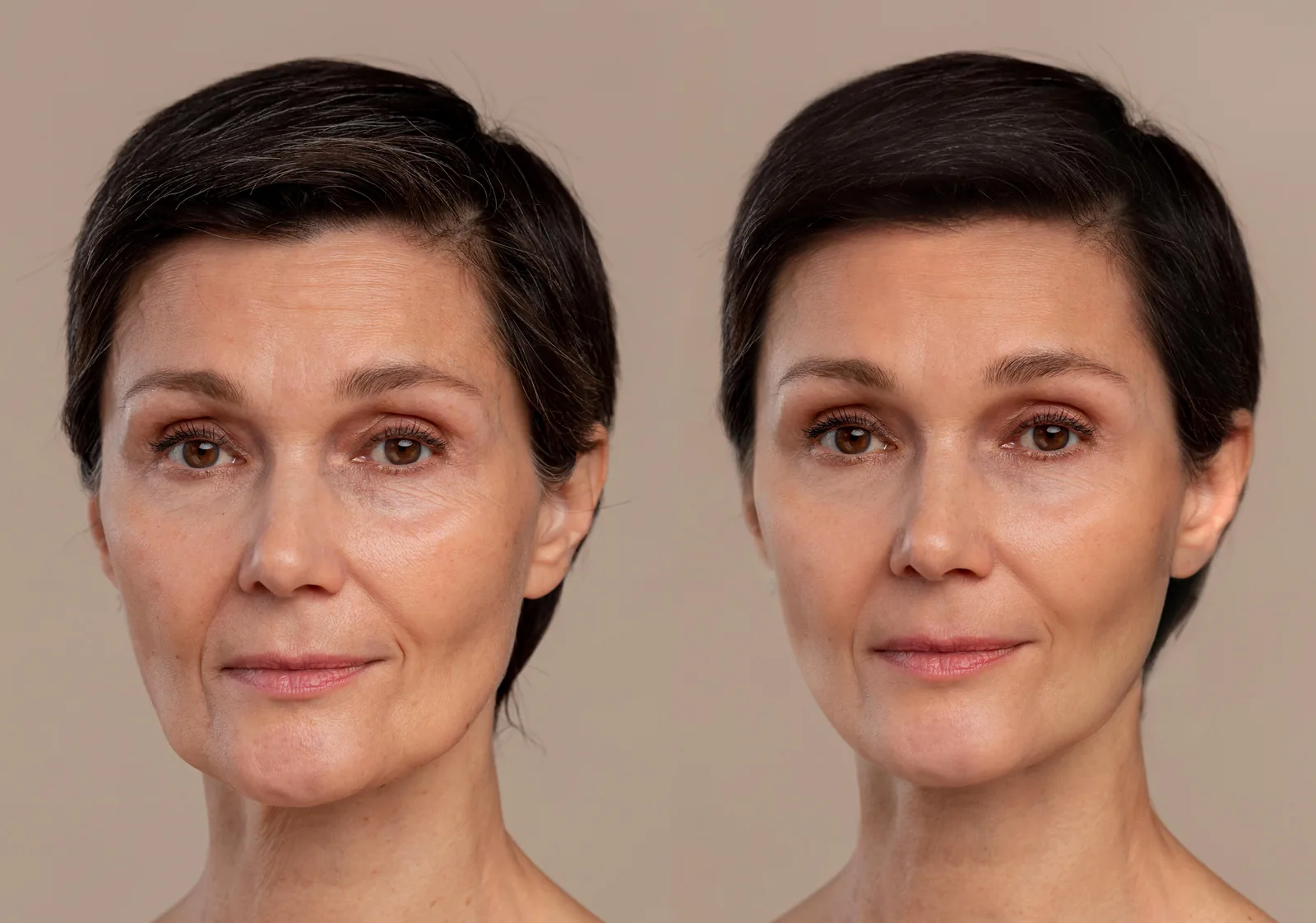
The changes are consistent, even if their pace and mix vary between people. Skin often becomes drier and feels tighter, as it holds less moisture. It can look and feel thinner and less firm, with a loss of the plump, bouncy quality of younger skin. Lines may become more visible, jawline definition can soften, and some people notice more sensitivity, dullness, or a change in tone. Adult breakouts can also appear as the balance of the skin shifts.
What genuinely helps
The honest answer is that no single thing does it, and a layered plan works best. The foundation is at home: consistent daily sun protection, a well-chosen routine that supports the barrier and hydration, and ingredients suited to this stage. On top of that, treatments that rebuild skin quality are especially well matched to menopausal skin, because they address exactly what has been lost.
Bio-remodelling treatments such as Profhilo deeply hydrate and stimulate collagen and elastin across an area, which suits skin that has become dry and lax. Skin boosters and polynucleotides support hydration and repair, and where mild laxity is the concern, our guide to the non-surgical face lift explains how firming treatments fit in. The point is not one hero treatment, but the right combination for your skin.
Why a personalised plan matters here
Menopausal skin is not one thing, and it changes over the phase. Someone in early perimenopause with dryness and dullness needs a different plan from someone years into menopause with more established laxity. This is exactly the kind of concern that rewards a considered, personalised approach: assess the skin as it is now, address what will make the most difference, and adjust over time. We would always rather do the right things in the right order than everything at once.
Menopausal skin at The Beauty Script
We treat this stage with the attention it deserves. A consultation and skin assessment come first, and from there we build a plan around your skin, your priorities, and where you are in the phase, combining home care with the treatments that genuinely rebuild quality. Care is led by a registered nurse prescriber. The clinic is Save Face accredited and JCCP registered, and treatments are carried out in CQC-regulated premises.
Questions
Frequently asked questions
The main reason is a fall in oestrogen, which supports collagen, skin thickness, and hydration. As levels decline through perimenopause and menopause, the skin loses that support, so it can become drier, thinner, and less firm. A substantial amount of skin collagen can be lost in the early menopausal years, which is why change can feel to accelerate.
Commonly, drier and tighter-feeling skin, a loss of firmness and thickness, more visible lines, and softening jawline definition. Some people notice more sensitivity, dullness, a change in tone, or adult breakouts as the skin’s balance shifts. The pace and mix vary from person to person.
Treatments that rebuild skin quality suit this stage well, because they address what has been lost. Bio-remodelling such as Profhilo hydrates and stimulates collagen, while skin boosters and polynucleotides support hydration and repair. Where mild laxity is a concern, firming treatments can help. The best result comes from the right combination, not one treatment.
The foundation is consistent daily sun protection, a routine that supports the barrier and hydration, and ingredients suited to this stage. Good home care does much of the quiet work and makes in-clinic treatments more effective. Your clinician can recommend a routine matched to your skin.
No. Skincare and aesthetic treatments address the skin, not menopause itself. If you are considering hormone replacement or have wider symptoms, that is a conversation for your GP or a menopause specialist. Aesthetic care for the skin can sit comfortably alongside medical management of menopause.
No. There is benefit at every stage. The right plan simply differs depending on where you are: early changes are addressed differently from more established laxity. A consultation assesses your skin as it is now and builds a plan that makes the most difference from here.
Yes. Menopausal skin varies from person to person and across the phase, so a personalised plan works far better than a fixed menu. A consultation and skin assessment identify what will make the most difference for your skin and build a plan you can adjust over time.
Important
This article is for general information only and is not medical advice. It should not replace a consultation with a qualified medical practitioner. Treatments described here are only suitable following an in-person assessment, and results vary between individuals. Always seek personalised clinical advice before deciding on any treatment.
Key takeaways
- Skin change around menopause is real and has a clear cause: a fall in oestrogen.
- Collagen can drop significantly in the early menopausal years, so firmness and thickness change.
- Common changes are dryness, thinning, loss of firmness, and more visible lines.
- A layered plan works best: good skincare and sun protection, plus treatments that rebuild quality.
- Bio-remodelling, skin boosters and regenerative injectables suit this stage well.
- A consultation builds a plan around your skin and this specific phase.
Written by
Valentina Pakhrutdinova
Registered Nurse Prescriber (NMC), Aesthetic Complications Expert
Valentina is the founder and lead practitioner of The Beauty Script. A registered nurse prescriber with a background in emergency and intensive care nursing, she takes an anatomy-led, consultation-first approach and treats only what will genuinely make a difference. She is Save Face accredited, JCCP registered, and an Aesthetic Complications Expert.
View profileNoticing your skin change?
Book a consultation and skin assessment for a personalised plan built around menopausal skin, combining home care with treatments that rebuild quality.
Book a consultation