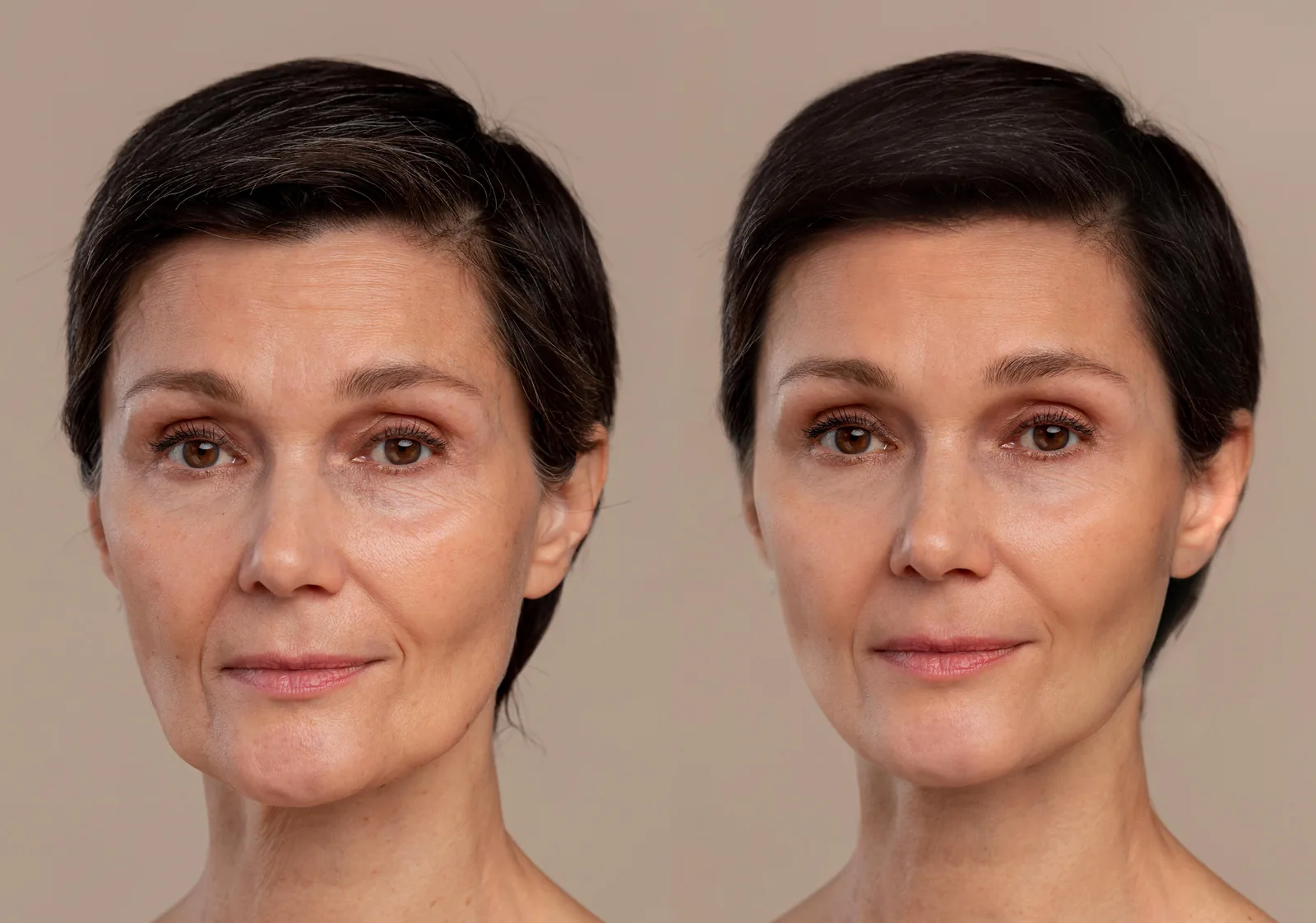
PDO Thread Lift Explained
A thread lift offers gentle, non-surgical support and a collagen boost. Here is an honest look at what PDO threads can and cannot do, and who they suit.
 Valentina PakhrutdinovaMedically reviewed by Valentina Pakhrutdinova9 min read
A PDO thread lift is a non-surgical treatment that uses fine, dissolvable threads to gently support the skin and stimulate the body to produce its own collagen. It offers a subtle lift and a gradual improvement in firmness, without surgery or a long recovery. It is important to be clear from the start that it is not a surgical face lift and does not produce the same result. Understood for what it is, though, it is a useful tool for the right person.
What a PDO thread lift is
PDO stands for polydioxanone, a material that has been used safely in medicine for many years, including in dissolvable surgical sutures. In an aesthetic thread lift, these fine threads are placed under the skin along carefully chosen lines. They do two things. First, they lend gentle mechanical support that lifts and repositions the tissue a little. Second, and just as importantly, the body responds to the threads by producing fresh collagen along their path, which firms and improves the quality of the skin over the following months.
The threads themselves dissolve gradually and are absorbed by the body, usually within several months. The collagen they stimulate remains, which is why the benefit continues after the threads have gone. This dual action, a little lift now and a collagen improvement over time, is the heart of how threads work.
What it treats, and who it suits
A thread lift suits mild to moderate laxity rather than significant sagging. It is often chosen for early jowling, a softening jawline, and a gentle loss of definition in the lower face, and it can offer subtle support to the brow or midface in the right candidate. The ideal person has good skin quality and realistic goals, wants a refreshed rather than a dramatically different look, and would prefer to avoid surgery.
It is not for everyone. Where laxity is advanced or there is a lot of loose skin, threads will not meet the goal, and a surgical opinion is the more honest route. A responsible clinic will tell you plainly when that is the case rather than sell a treatment that cannot deliver what you want.
What to expect: the treatment and recovery
The treatment is carried out under local anaesthetic and usually takes around thirty to sixty minutes, depending on the area. Fine threads are introduced through a small entry point using a needle or cannula, and positioned with care. Most people find it very manageable. Afterwards you can expect some swelling, tenderness, and occasionally minor bruising, which settles over the following days to a couple of weeks. Some tightness or a slight pulling sensation as you move is normal early on and eases as things settle.
You will be given clear aftercare, which typically includes avoiding vigorous facial movement, sleeping on your back, and holding off on strenuous exercise and facial treatments for a short period so the threads can settle well.
Results and how long they last
There is usually a visible lift straight away from the mechanical support, though the fullest result develops over the weeks and months that follow as new collagen forms. Results typically last somewhere in the region of a year to eighteen months, though this varies with the individual, the area, and how the skin ages. Because the effect is gradual and softens over time, many people plan a maintenance treatment rather than a single one.
Threads are often at their best as part of a considered plan rather than in isolation. Combined thoughtfully with treatments that improve skin quality or restore lost support, they contribute to a natural, balanced result. Our guide to the non-surgical face lift explains how these treatments work together, and our piece on why the face ages sets out the changes each one addresses.
Threads compared with other options
| Option | Mainly helps | How it works |
|---|---|---|
| PDO thread lift | Mild laxity and definition | Gentle support plus collagen along the thread |
| Skin tightening | Firmness and mild laxity | Heats the deeper skin to prompt collagen |
| Bio-remodelling | Skin quality and hydration | Stimulates collagen and elastin across an area |
| Structural filler | Lost support and proportion | Restores volume where the face has lost it |
Thread lifts at The Beauty Script
Our approach is medically-led and consultation-first. We assess your face honestly, explain what threads can and cannot achieve for you, and will recommend a different treatment, a combination, or a surgical opinion where that would serve you better. You can explore our thread lift and lifting treatments on their own page. Care is led by a registered nurse prescriber. The clinic is Save Face accredited and JCCP registered, and treatments are carried out in CQC-regulated premises.
Questions
Frequently asked questions
It is a non-surgical treatment that uses fine, dissolvable polydioxanone threads placed under the skin to give a gentle lift and to stimulate the body to produce its own collagen. The threads dissolve over several months, while the collagen they stimulate continues to firm and improve the skin.
No. A thread lift is a gentle, non-surgical option that suits mild to moderate laxity. It cannot remove excess skin or reproduce the result of a surgical face lift. Where laxity is advanced, a surgical opinion is the more honest route, and a good clinic will tell you so.
The treatment is carried out under local anaesthetic, so most people find it very manageable. Afterwards you can expect some swelling, tenderness, and occasionally minor bruising for a few days, along with a little tightness as the threads settle, all of which ease over the following days to a couple of weeks.
Results typically last somewhere in the region of a year to eighteen months, though this varies with the individual and the area. There is usually a visible lift straight away, with the fullest result developing over the weeks that follow as new collagen forms. Many people plan a maintenance treatment as the effect softens.
Recovery is short. You may have swelling, tenderness, and occasionally bruising for a few days. Aftercare usually includes avoiding vigorous facial movement, sleeping on your back, and holding off on strenuous exercise and facial treatments for a short period so the threads settle well.
A thread lift suits people with mild to moderate laxity, good skin quality, and realistic goals, particularly for early jowling and a softening jawline. It is not suitable where there is significant sagging or loose skin. A consultation and facial assessment confirm whether threads are the right choice for you.
Yes, and it is often at its best that way. Combined thoughtfully with treatments that improve skin quality or restore lost support, threads contribute to a natural, balanced result. Which combination suits you is decided at consultation, based on your face and your goals.
Important
This article is for general information only and is not medical advice. It should not replace a consultation with a qualified medical practitioner. Treatments described here are only suitable following an in-person assessment, and results vary between individuals. Always seek personalised clinical advice before deciding on any treatment.
Key takeaways
- A PDO thread lift uses fine, dissolvable threads to gently support the skin and stimulate collagen.
- It gives a subtle lift and a gradual improvement in skin quality, not a surgical result.
- It suits mild to moderate laxity, particularly early jowling and a softening jawline.
- PDO threads dissolve over months, while the collagen they stimulate continues the effect.
- It is often most effective as part of a plan rather than in isolation.
- A consultation and facial assessment confirm whether threads are right for you.
Written by
Valentina Pakhrutdinova
Registered Nurse Prescriber (NMC), Aesthetic Complications Expert
Valentina is the founder and lead practitioner of The Beauty Script. A registered nurse prescriber with a background in emergency and intensive care nursing, she takes an anatomy-led, consultation-first approach and treats only what will genuinely make a difference. She is Save Face accredited, JCCP registered, and an Aesthetic Complications Expert.
View profileConsidering a thread lift?
Book a consultation and facial assessment for an honest view of whether threads suit your face, and what is realistic. No pressure to proceed.
Book a consultation